France’s France Num 2026 barometer, published on September 28 by the Directorate-General for Enterprise (DGE), contains a figure that made the headlines:
40% of French very small, small and medium-sized businesses now use artificial intelligence solutions.
That is 14 points more than a year ago. Among SMEs, the share even reaches 53% (+19 points).
But reading the rest of the study, carried out among more than 9,000 businesses, another figure struck me as even more interesting.
AI is growing fast… but it is not the priority
When business owners are asked about their priority projects for 2026–2027, here is what comes out:
E-invoicing reform        39%
Software purchases        26%
Training                  21%
Hardware purchases        19%
Artificial intelligence   18%
AI comes last.
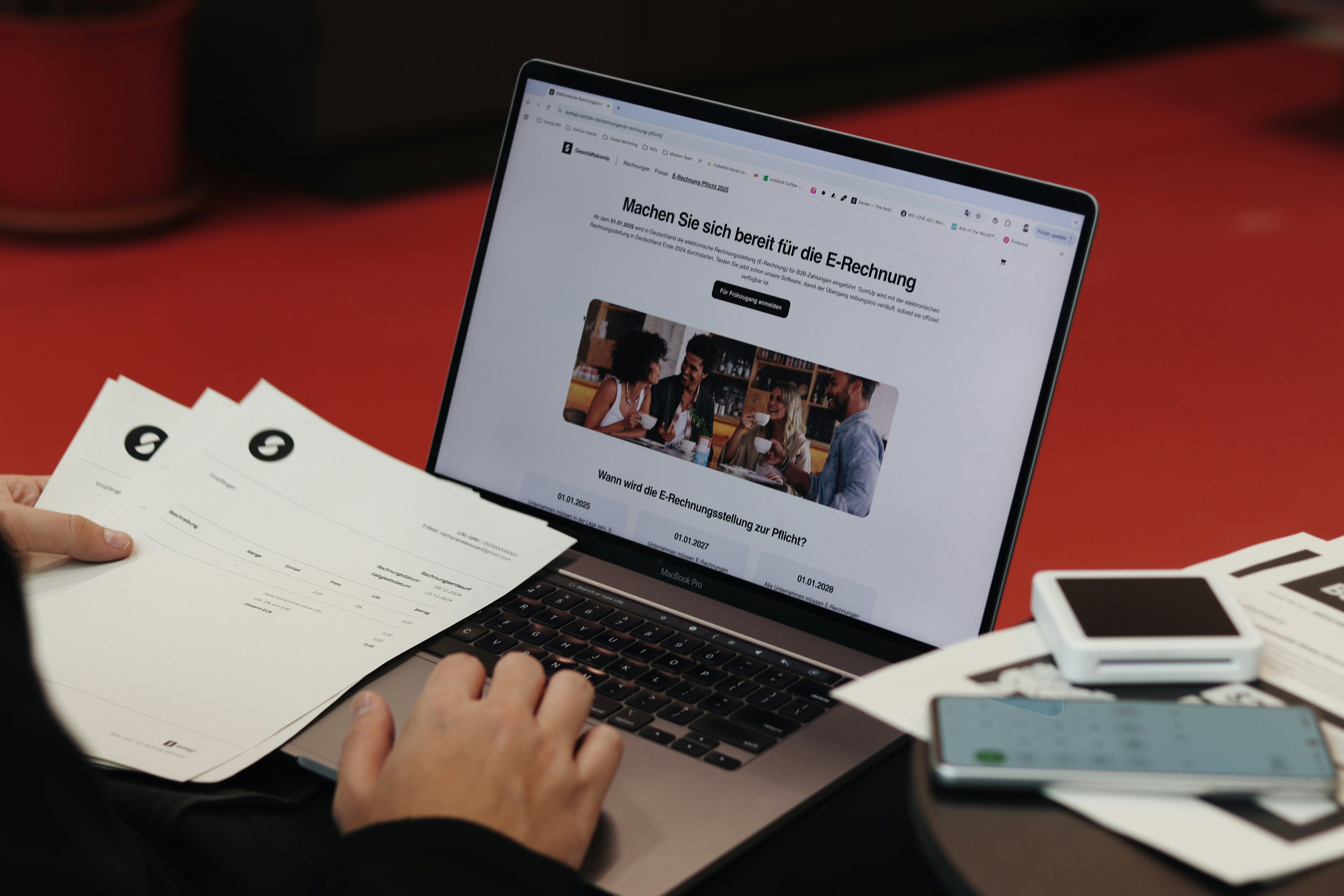
E-invoicing, whose first phase started on September 1 in France, comes out well ahead.
This is not contradictory. It is actually very logical.
Mostly “free” adoption
While 40% of businesses use AI, only 19% pay for a solution (32% among SMEs).
And usage remains fairly general:
- generating text, voice or images: 34%;
- chatbots, assistants or information search: 24%;
- analysing or classifying documents: 13%;
- automating tasks: 11%.
In other words, many businesses use a conversational assistant to write an email or a listing.
Far fewer have integrated AI into their processes.
Yet the barometer also shows that among businesses paying for an AI solution, 85% see a positive effect on their activity (compared with 68% of all users).
The real issue: AI and invoicing are not two separate projects
This is where I find the barometer revealing.
Business owners see two topics:
Project 1: become compliant (e-invoicing)
Project 2: "do AI"
And since time and budget are limited, compliance naturally comes first.
But in practice, the two topics converge.
E-invoicing requires businesses to:
- use suitable software;
- structure their invoicing data;
- make customer and product information reliable;
- rethink the quote → invoice → payment chain.
These are exactly the conditions AI needs to be useful.
An AI that reads a voice note, prepares a quote or matches a supplier invoice works all the better when data is clean and structured.
What I would advise a small business
Rather than treating AI as a separate project, I would start from the regulatory constraint:
Choice of invoicing software
↓
Structured customer / product data
↓
Clarified quote → invoice → payment process
↓
Identification of repetitive tasks
↓
Targeted automation (with AI where it helps)
The right questions to ask:
- Which administrative tasks take up most of my time each week?
- Where do I re-enter the same information several times?
- Does my future invoicing software offer an API or connectors?
- Which data will have to be reliable for the reform anyway?
Compliance is mandatory. You might as well use it to eliminate data entry.
A point of caution: cybersecurity
For the first time, the barometer measures incidents: 39% of businesses report having experienced one in the past twelve months, and 53% of business owners fear data loss or hacking.
That is a useful reminder.
Connecting AI tools to customer or invoicing data means thinking about access, permissions and where the data is sent.
Multi-factor authentication, used by only 39% of businesses, should be a prerequisite.
In short
The France Num 2026 barometer shows that AI has entered small businesses.
But it is still mostly used as a writing assistant, not as a tool for transforming processes.
E-invoicing, which business owners rank as their top priority, is probably the best way in to change that.
Not by adding “some AI”.
By first building clean data and processes, on which AI can then genuinely save time.
Further reading :